Subjects
Grades
 100%
100%
 100%
100%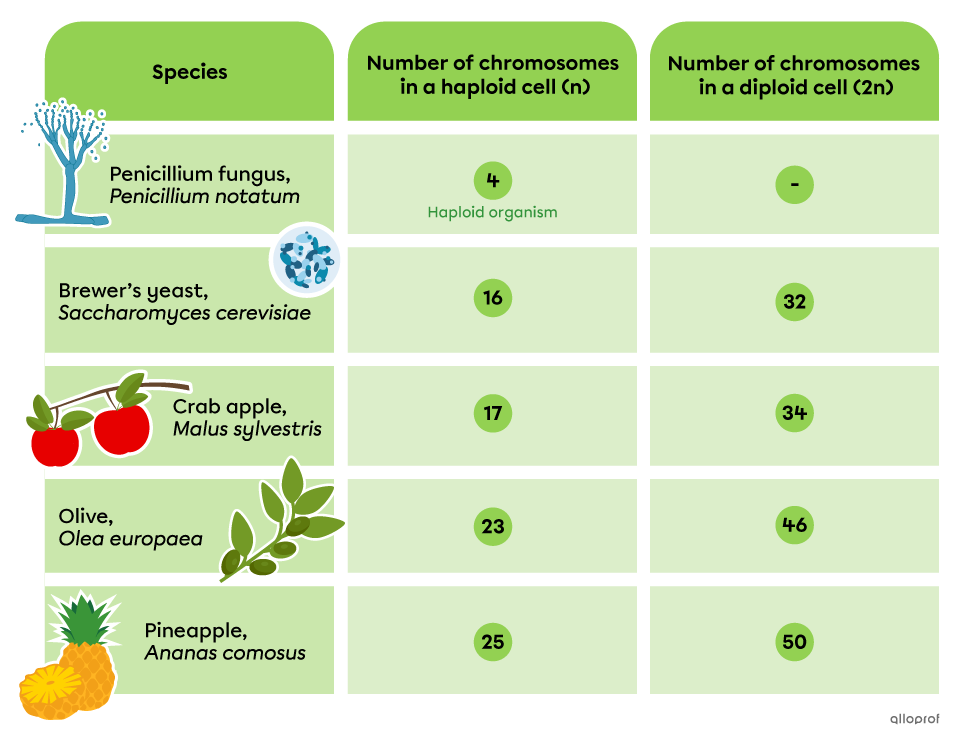 100%
100%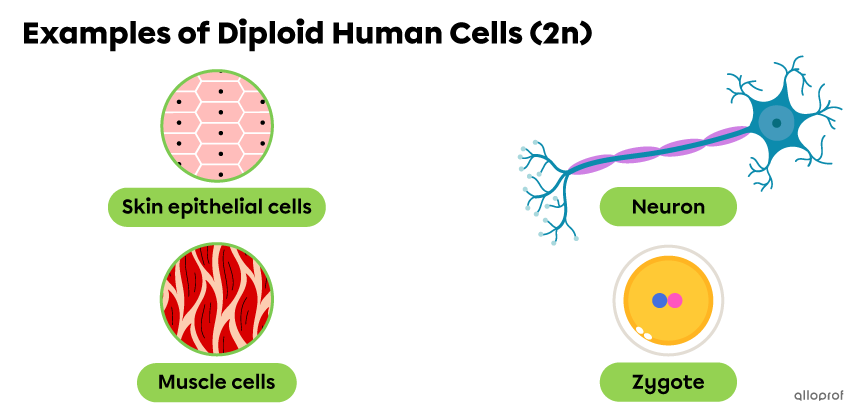 100%
100%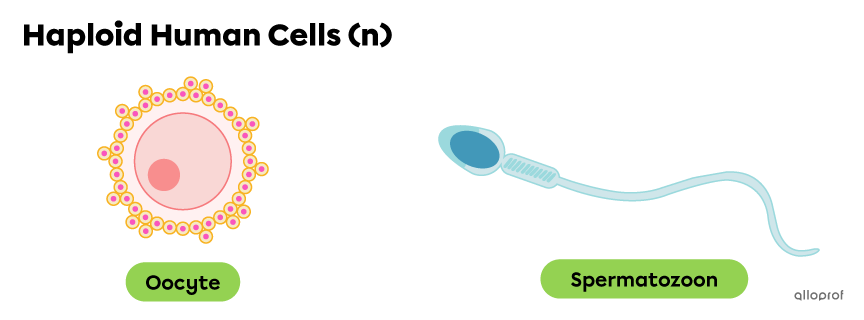 100%
100%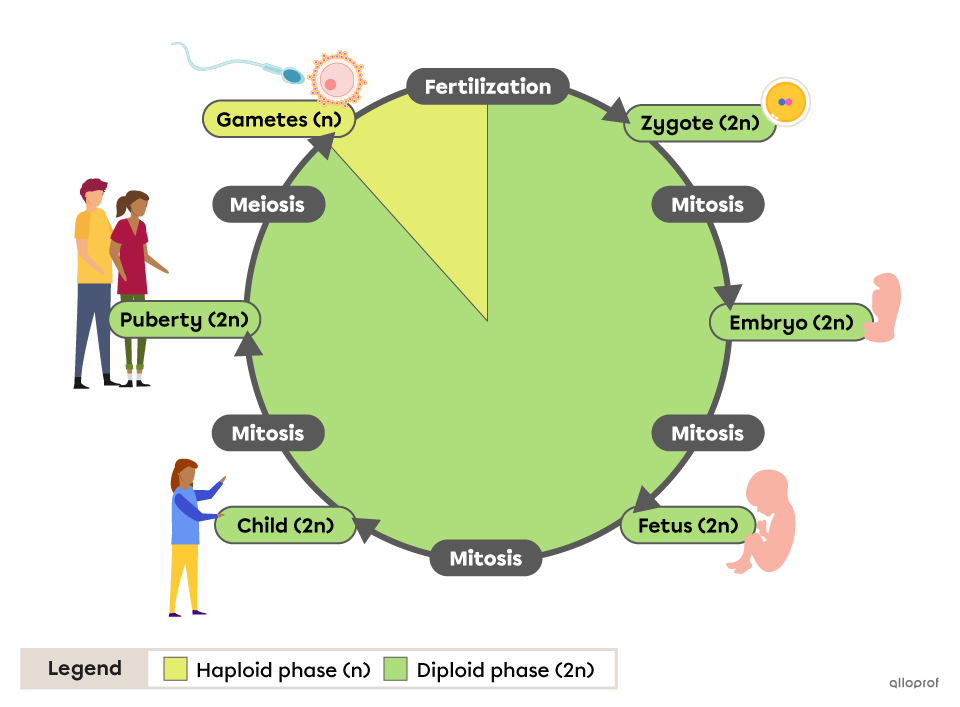
The content covered in this concept sheet goes beyond high school material. It is an enrichment for those who are curious to learn more in depth details. For the content covered in Secondary 3, take a look at this concept sheet.
The term haploid describes an organism, cell or cell nucleus that contains only one set of chromosomes.
The term diploid describes an organism, a cell or the nucleus of a cell that contains two sets of chromosomes.
The symbol |\bf \text{n}| means haploid. The value of |\text{n}| corresponds to a number of chromosomes and varies from one species to another.
The symbol |\bf \text{2n}| means diploid. The value of |\text{2n}| corresponds to the doubled value of |\text{n}.|
In humans, |\text{n}=23| chromosomes and |\text{2n}=46| chromosomes because |2\times23=46.|

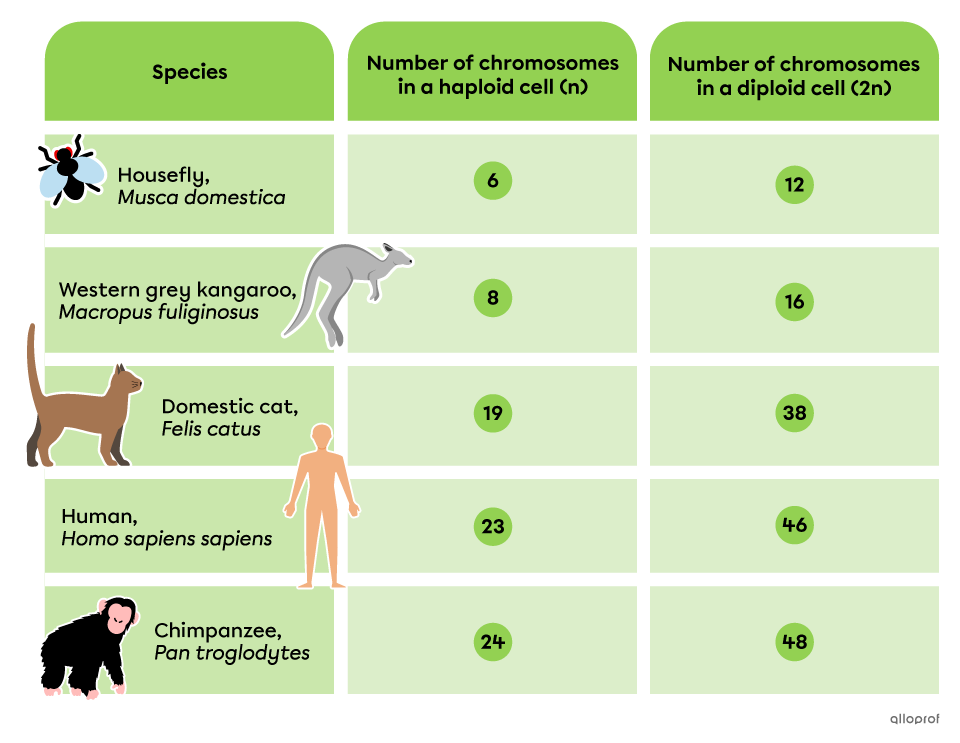
The number of chromosomes in haploid and diploid cells in some animal species
The number of chromosomes in haploid and diploid cells in some species of fungi and plants
Examples of human diploid cells are skin epithelial cells, neurons, muscle cells and zygotes. There are 46 chromosomes in their nuclei.
The oocyte (immature ovum) and the spermatozoon are called reproductive cells or gametes. These gametes are the only haploid cells in the human body. The female reproductive system produces the oocyte during oogenesis, and the male reproductive system produces the spermatozoa during spermatogenesis. Gametes are used only for sexual reproduction and have 23 chromosomes in their nuclei.
Humans are therefore diploid organisms that produce haploid gametes. The human development cycle is characterized by a very long diploid period and a very short haploid period.
These are the stages of the human development cycle:
Two haploid |(\text{n})| gametes combine during fertilization and form a diploid zygote |(\text{2n}).|
Through mitosis, the zygote grows and develops until the end of adolescence.
Through meiosis, the reproductive system produces haploid gametes |(\text{n})| that could participate in fertilization. A new cycle begins.
The human development cycle
In the previous picture, the haploid phase of the human development cycle is very short. This is not the case for all species. Many species have haploid and diploid phases that are quite different from humans. For example, the development cycle of sea lettuce is shown here.